Guide · · Shelving and Racking
Gondola shelving: how many bays, and wall run or island?
Gondola shelving is the free standing bay a shop floor is built from, rated here at 120 kg a bay and from £96 ex VAT, bulk price. Bays bolt into runs, so the number you order comes from the clear aisle length divided by the bay width on your quote, not from a catalogue pack size. Single sided bays go against the wall, double sided bays go back to back down the middle, and the lighter racks and tables around them start from £23 ex VAT, bulk price.
Why gondola shelving still sets the shape of a shop floor
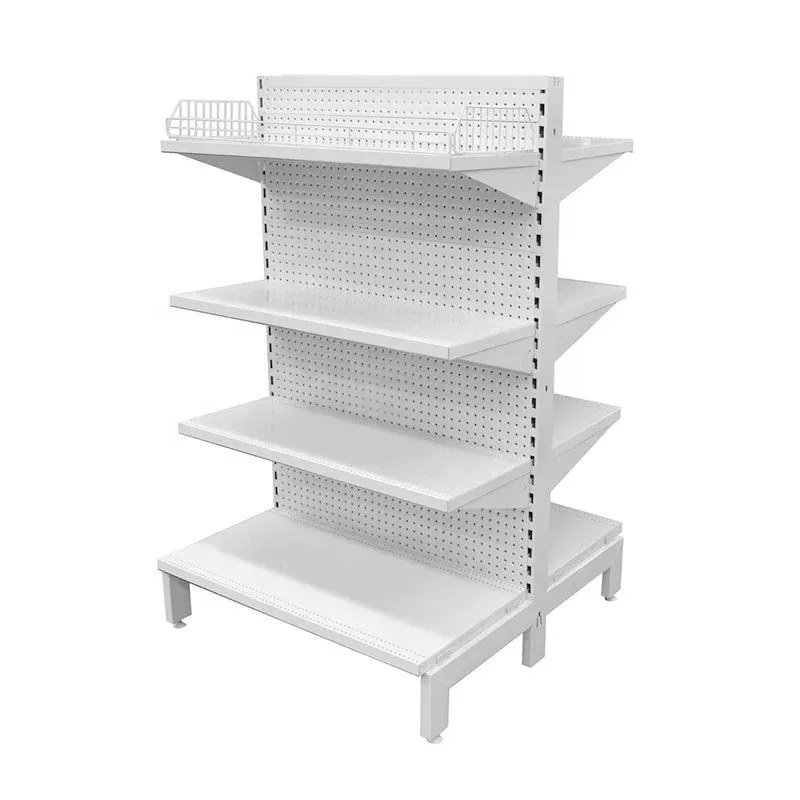
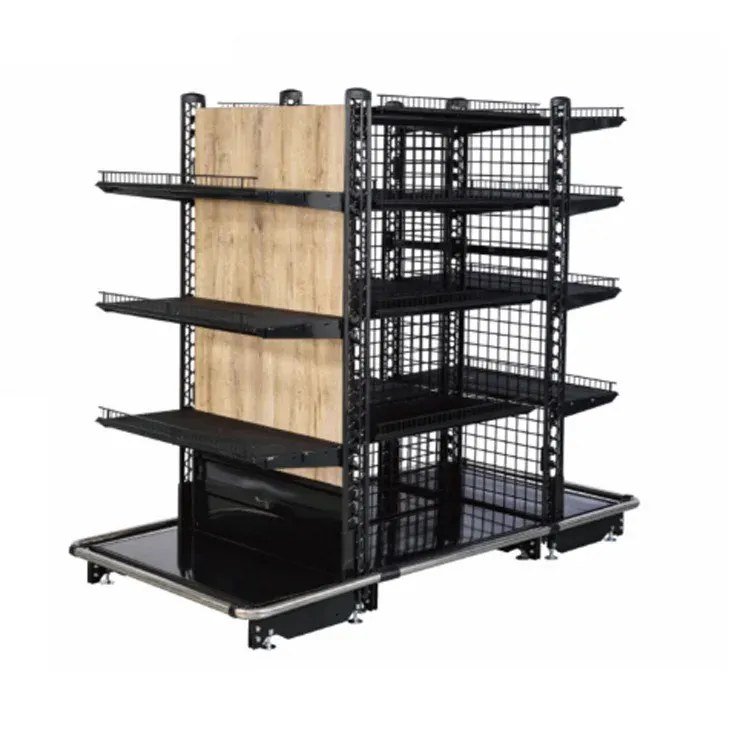
Gondola shelving is the free standing bay with a solid back panel, a deeper base shelf and adjustable shelves above it. Bays bolt together into a run, which is why a shop floor built on gondolas looks square and stays square: the frames brace each other, and a trolley catching the end of a run does not push the whole thing out of line. The bay in the shelving and racking range is rated at 120 kg and starts from £96 ex VAT, bulk price.
The back panel is what separates it from an open rack. On an island, two faces share one frame and the panel stops stock on one side being pushed through to the other. On a wall run, the panel keeps packets off the brickwork and gives you something to clip ticket strips to. Open wire racks still earn their place for light packets and impulse lines, but the aisle itself wants a closed back and a base plinth.
The other reason the format holds is parts. Shelves, brackets and ticket strips come off the same frame, so a run can be reset to a different shelf pitch in an afternoon without new uprights. That matters more than the headline price when the planogram changes twice a year.
How many gondola shelving bays does an aisle need?
Bays are ordered one at a time and bolt into a run, so the count comes from the floor, not from a pack size. Measure the clear run wall to wall, take off the gap you want at each end so a trolley can turn, then divide what is left by the bay width confirmed on your written quote. Round down, never up: a run that is forced into a space fights the aisle for the rest of its life.
- Wall runs: single sided bays round the perimeter, backs to the wall, usually carrying the deepest shelves in the shop.
- Islands: double sided bays back to back down the middle, faced from both aisles, so one frame earns twice.
- Ends: the bay at each end of an island does the most trade, so keep its shelves shallow and leave the end square rather than tapering it.
- Spares: order one extra bay with the run if the aisle length is awkward. Shortening a run later is easy, matching a single bay to an old one is not.
Leave enough room between runs for the widest trolley you use plus a person passing it. Narrowing an aisle to win one more bay is the change most often reversed, and by then the shelving is already built.
Gondola shelving compared with the lighter units around it
Four units from the same range, with the job each one does and the price each one starts at.
| Unit | Where it goes | Load shown | Price |
|---|---|---|---|
| Gondola shelving bay | Shop floor wall runs and islands | 120 kg a bay | from £96 ex VAT, bulk price |
| Double sided steel frame shelving | Stockroom, faced from both sides | Confirmed on your written quote | from £36 ex VAT, bulk price |
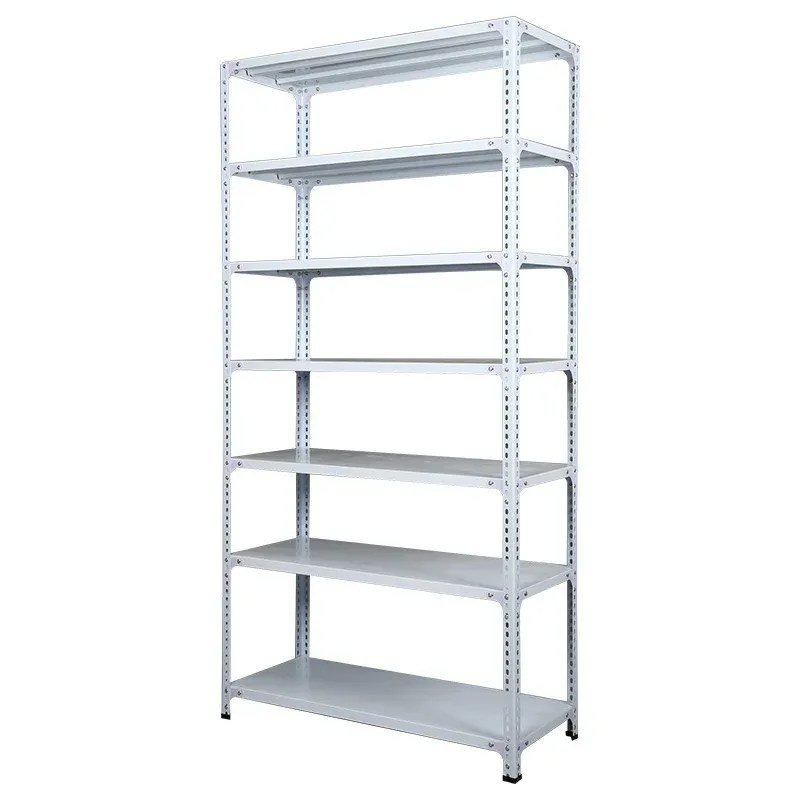
| Multi level angle steel rack | Corners, spares and slow lines | Confirmed on your written quote | from £23 ex VAT, bulk price |
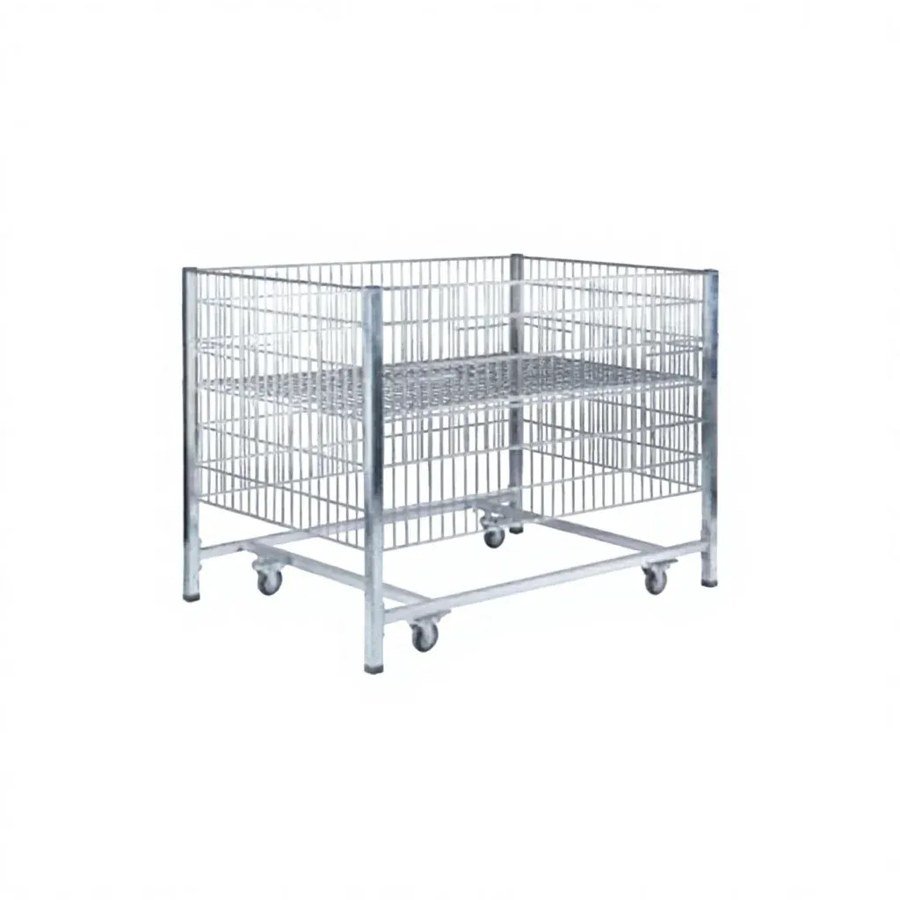
| Waterproof promotion table | Aisle ends and stacked promotions | 80 kg | from £64 ex VAT, bulk price |
The spread from the lightest rack to the gondola bay is roughly four times, which is why most fit outs mix them rather than buying one unit for everything. Gondola bays go where stock sells and gets faced every day. Angle steel racks and frame shelving go where nobody but staff ever looks.
Single sided or double sided: where each gondola shelving run goes
A single sided bay has one shelf face and a back panel that sits against the wall. It is the right unit for a perimeter run, and because the wall takes the back you can usually run deeper shelves than you would risk on an island. Chillers, bulk packs and the heavy tinned lines tend to end up here.
A double sided bay is two faces on one frame, standing free in the middle of the floor. It gives you twice the facings for one set of uprights and one footprint, which is the lowest cost shelf space in the shop. The trade off is stability and depth: shelves are shallower, the run has to be bolted straight through, and it needs end panels to stop stock walking off the end.
Behind the scenes the same logic applies at a lower price. Heavy duty double sided steel frame shelving is from £36 ex VAT, bulk price and does the island job in a stockroom where nothing needs facing up and no customer sees the frame.
What to check before you buy gondola shelving
Seven things decide whether a run works on the day it is built.
- Load per shelf, not just per bay. The 120 kg figure on the gondola bay is the bay rating. Ask for the figure per shelf and plan the heavy lines low.
- Bay width and height. Both set the bay count and whether your top shelf is reachable without steps. Put the ceiling height on the enquiry.
- Base shelf depth and plinth. The base shelf carries the weight and sets how far the run eats into the aisle.
- Shelf pitch. Check how close together the adjustment slots are, because that is what limits a reset later.
- End panels and ticket strips. Say whether you need them. They are the parts most often left off an enquiry and most missed on site.
- Finish. Powder coated steel suits a dry shop floor. Damp areas, chillers and wash down zones want a galvanised or stainless unit instead.
- Feet and levelling. Old retail floors are rarely flat, and adjustable feet are what keep a long run straight.
Send the aisle lengths, the ceiling height and the heaviest line you plan to shelve, and the written quote confirms price, freight, VAT and lead time.
What feeds a gondola shelving run from the back
A shop floor run only works if the stockroom behind it is sorted the same way. Replenishment is faster when back of house shelving is split by aisle, not by supplier, so a member of staff picks one trolley for one run.
Multi level angle steel racks from £23 ex VAT, bulk price are a low cost way to line a stockroom wall, and they take the odd sizes and slow lines that would otherwise block a gondola shelf. Heavier frame shelving handles the bulk packs.
On the floor itself, the unit that works hardest next to a gondola run is a flat top. A waterproof promotion table rated at 80 kg, from £64 ex VAT, bulk price, holds a stacked promotion at an aisle end where a shelf would only give you two facings. Guide prices for the full range are on the price guide, and any quantity is welcome on an enquiry.
Shelving in this guide
Questions people ask
What is gondola shelving?
It is a free standing shop shelving bay with a solid back panel, a deep base shelf and adjustable shelves above it. Bays bolt together into runs and come single sided for walls or double sided for islands.
How much weight does a gondola shelving bay hold?
The bay listed here is rated at 120 kg. That is the bay figure, so ask for the load per shelf as well and keep the heaviest lines on the base shelf.
How much does gondola shelving cost?
A bay starts from £96 ex VAT, bulk price. The price for the quantity and specification you need is confirmed on your written quote by email.
How do I work out how many bays I need?
Measure the clear aisle wall to wall, take off the turning gap at each end, then divide by the bay width on your quote and round down. Send us the aisle lengths and we will do the arithmetic with you.
Can I mix single sided and double sided bays in one shop?
Yes, and most shops do. Single sided bays go round the perimeter where the wall carries the back, double sided bays go down the middle where one frame serves two aisles.
What shelving should go in the stockroom instead?
Double sided steel frame shelving from £36 ex VAT, bulk price or multi level angle steel racks from £23 ex VAT, bulk price. Neither needs the back panel or the finish of a shop floor bay.