Comparison · · Forklifts
Rough terrain forklift or a yard diesel for soft and rutted ground
A four wheel drive rough terrain forklift rated 2.5 to 3 t is from £7,960 ex VAT, against £4,460 ex VAT for a cabbed Euro 5 diesel counterbalance rated 2 to 4.5 t on pneumatic tyres. The extra money buys ground clearance, four wheel drive and tyres that float on soft going, so it pays on mud, grass, hardcore and slopes, and not on a potholed concrete yard. Ground clearance, tyre type and the steepest gradient you cross decide it, not the weather on the day.
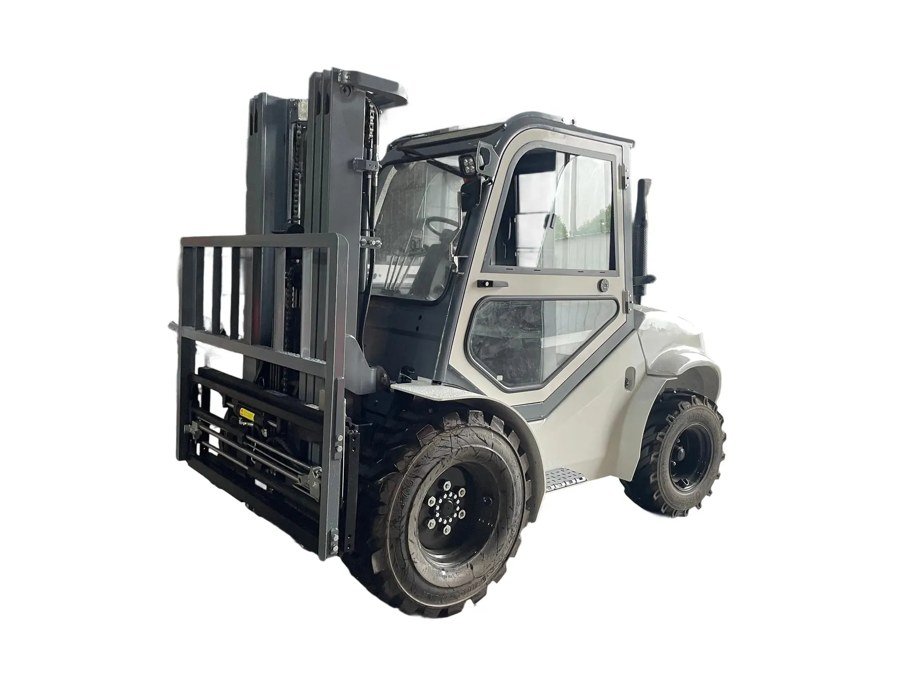
What a rough terrain forklift does that a yard truck cannot
A counterbalance forklift is built for a flat, made up surface. Put the same truck on wet clay, hardcore or a grass verge and it stops being a lifting machine: the drive wheels spin, the front axle digs in, and the load ends up being dragged rather than carried. That is the gap a rough terrain machine fills.
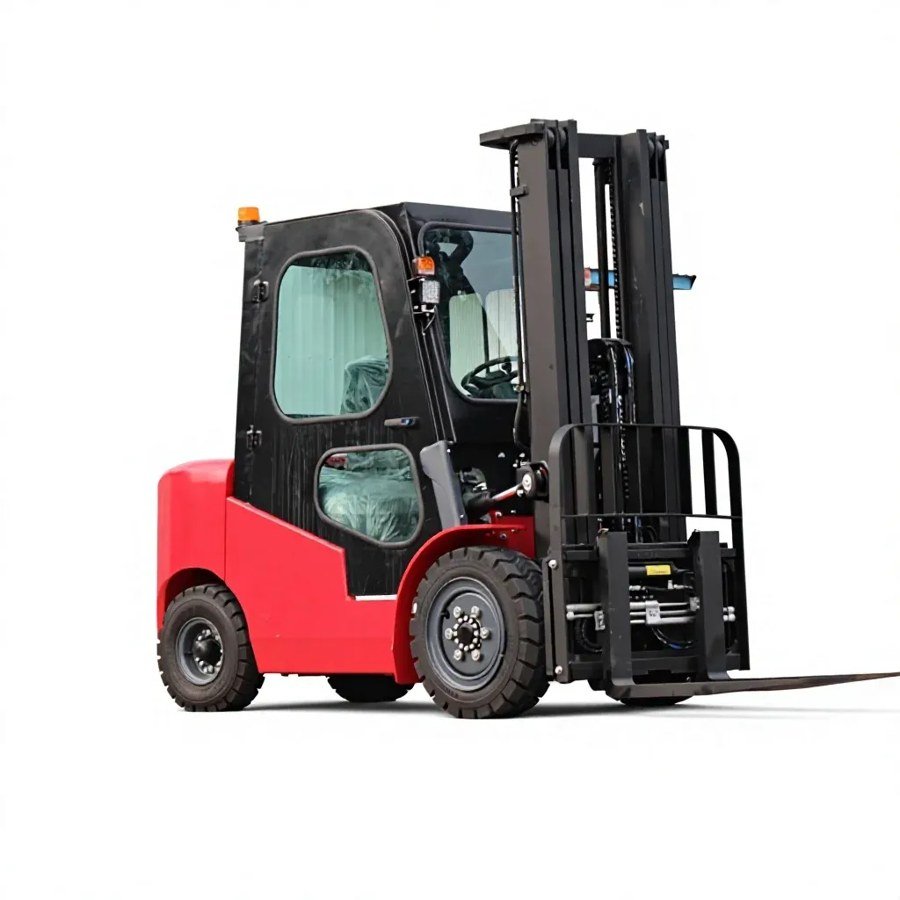
The differences are mechanical and easy to see. A 4WD rough terrain forklift rated 2.5 to 3 t is from £7,960 ex VAT and drives through all four wheels, on deep tread pneumatic tyres, with high ground clearance under the axles and a chassis that keeps the mast out of the ruts. A yard truck on the same site drives through two wheels and sits low.
The comparison is with a cabbed Euro 5 diesel counterbalance, 2 to 4.5 t, from £4,460 ex VAT. On a concrete yard with potholes and a shallow ramp the cheaper truck does the job and costs less to run. The question is never which machine is better, it is what your worst 20 metres of ground looks like in February. Both sit in the forklift range.
Rough terrain forklift, diesel, LPG or electric: the comparison
| Truck | Capacity | Surface it suits | Guide price ex VAT |
|---|---|---|---|
| 4WD rough terrain, diesel | 2.5 to 3 t | Mud, grass, hardcore, building sites, gradients | from £7,960 |
| Diesel counterbalance with cab, pneumatic tyres | 2 to 4.5 t | Hard standing, potholed concrete, open yards in all weather | from £4,460 |
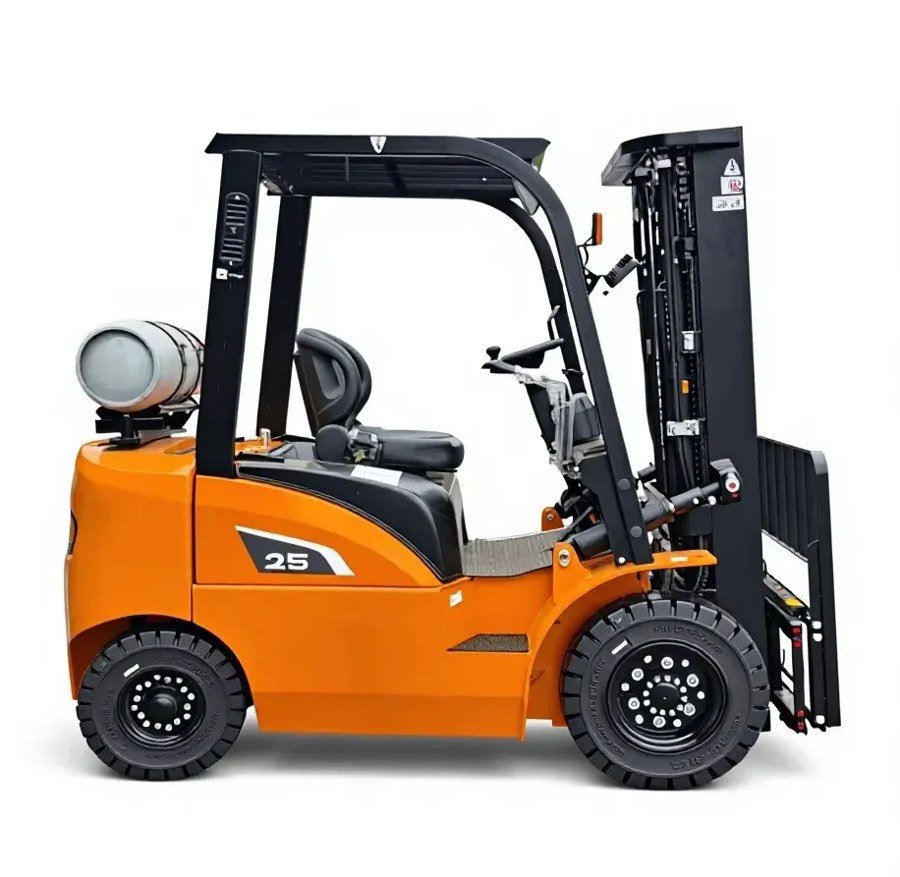
| LPG counterbalance, pneumatic tyres | 3 to 5 t | Yard plus a well ventilated covered bay | from £3,980 |
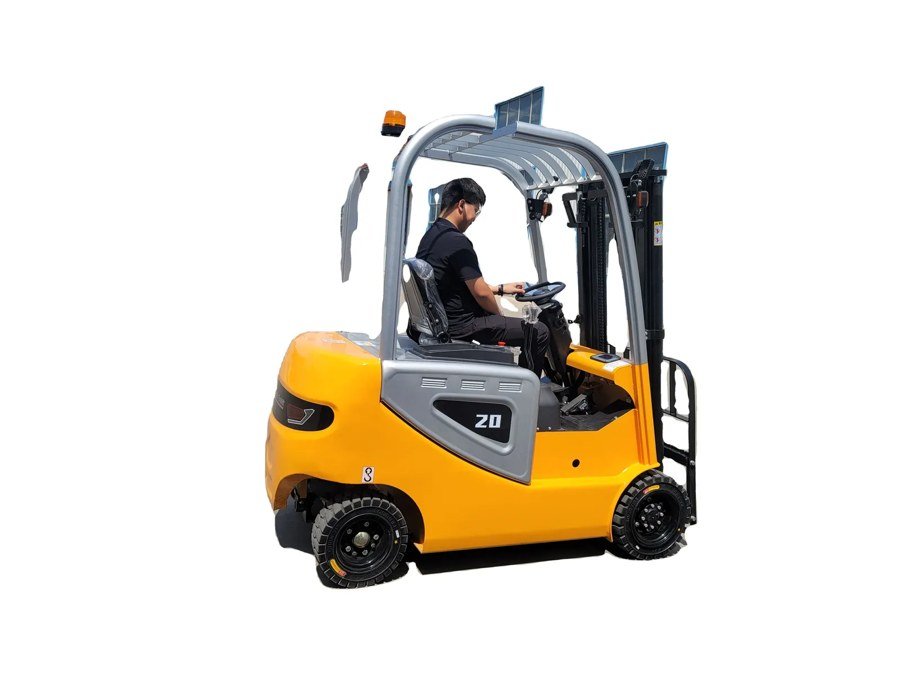
| Lithium electric, indoor and outdoor rated | 2 to 3 t | Sealed yard and warehouse on one shift pattern | from £7,800 |
Read the table by surface first and by capacity second. Capacity is cheap to add on a diesel truck and expensive to add on a rough terrain one, which is why a 3 to 5 t LPG machine undercuts a 3 t off road machine.
Tyres and ground clearance matter more than four wheel drive
Three tyre types turn up on a quote. Solid or cushion tyres are for smooth indoor floors and give the smallest turning circle. Pneumatic tyres are air filled, soak up potholes and spread the load over a wider contact patch, which is what you want outside. Foam filled tyres are pneumatic casings filled solid, so they cannot puncture on swarf, nails or broken pallet boards, at the cost of a harder ride and more weight.
An LPG truck on pneumatic tyres rated 3 to 5 t from £3,980 ex VAT will cross a rough yard perfectly well. What it will not do is climb a muddy slope, because two driven wheels on a low slung chassis run out of grip long before the engine runs out of power.
Measure the worst gradient on site before you choose. A loading apron that drops away to a lower yard, a ramp cut into a bank, or a field gate approach that turns to slurry are the three that catch people out. Where the slope is the only problem and the surface itself is sound, a fixed or mobile ramp is often the cheaper answer than a bigger truck: see the yard ramps.
Working outdoors from October to March
Winter changes the specification more than most buyers expect. A full cab with a heater, a wiper and a demister is the difference between a driver who works steadily through a wet afternoon and one who cuts corners to get back inside. Working lights front and rear, a beacon and a reversing alarm matter from mid afternoon onwards once the clocks go back.
Fuel behaves differently in the cold too. Diesel starts best with a glow plug system in good order and a charged battery. LPG draws from a liquid tank that vaporises more slowly on a frosty morning, so allow a little warm up. A lithium battery loses usable capacity in low temperatures and charges more slowly below about 5 C, which is worth planning for if the truck lives outside. A lithium electric truck rated for indoor and outdoor use, 2 to 3 t, is from £7,800 ex VAT and is the one to pick when the truck moves between a sealed yard and a warehouse.
Salt and grit are the quiet cost. Wash the mast channels, chains and fork carriage down at the end of a gritted week and keep the chains oiled, or you will be buying chains inside two winters.
Capacity, load centre and mast height outdoors
Rated capacity is quoted at a 500 mm load centre, measured from the fork face to the centre of gravity of the load, on level ground with the mast vertical. A 1,200 mm pallet loaded evenly sits close to that. A 2.4 m bundle of timber, a stillage of fencing or a bulk bag that sags forward does not, and the safe load drops away quickly as the centre moves out.
Outdoors two more things eat into it. On a slope the effective load centre moves, so travel with the load low and the mast tilted back, and never turn across a gradient with the forks raised. On soft ground the truck itself can lean, which has the same effect. Build headroom into the figure rather than buying to the exact weight on the heaviest pallet.
Mast height needs the same care. Check the lowered mast height against the lowest door, canopy or cable crossing the yard, and the full lift height against the top of the stack you actually build. Fork length on these machines is commonly 1,070 mm or 1,220 mm: the longer pair is worth having for deep stillages, and a fork extension is not a substitute.
What to check before you buy a rough terrain forklift
- Walk the route the truck will take in winter, not in August, and note the worst surface and the steepest gradient.
- Weigh or confirm the heaviest load, and measure its load centre. Quote capacity at that figure, not at 500 mm, if the load is long.
- Check lowered mast height against every opening the truck passes under, and lift height against the top of your stack.
- Decide tyres: pneumatic for comfort and grip, foam filled where punctures are a regular problem.
- Specify the cab, heater and lighting if the machine works outside through winter. Retrofitting is rarely tidy.
- Confirm fork length, carriage class and any side shift or fork positioner at quotation stage.
- Budget for operator training to the HSE standard and for a thorough examination of the lifting parts at least every 12 months.
- Price, freight, duty, VAT and lead time are confirmed on your written quote, which is valid for 30 days.
Forklifts for outdoor yards and rough ground
Questions people ask
What counts as a rough terrain forklift?
A counterbalance truck built for unmade ground: four wheel drive, deep tread pneumatic tyres, high ground clearance and a chassis that keeps the mast clear of ruts. The 2.5 to 3 t machines start from £7,960 ex VAT.
Can a standard counterbalance forklift work outside?
Yes, on a made up surface. Specify pneumatic tyres and a cab, and it will handle a potholed concrete or tarmac yard in all weather, from £4,460 ex VAT with a Euro 5 diesel engine. Mud, grass and steep slopes are where it stops.
What capacity should I order?
Take the heaviest load you lift, add headroom for the pallet or stillage itself, and check the figure at your real load centre rather than the 500 mm the rating assumes. Long or forward leaning loads cut the safe capacity sharply.
Diesel or LPG for a yard truck?
Diesel pulls better on gradients and in mud and is the normal choice for an open yard. LPG runs cleaner and suits a truck that also works in a well ventilated covered bay, from £3,980 ex VAT at 3 to 5 t.
Will an electric forklift cope outdoors in winter?
On a sealed, drained surface, yes, provided the truck is rated for outdoor use and you accept slower charging and reduced range in the cold. A lithium machine rated for both, 2 to 3 t, is from £7,800 ex VAT.
What training and inspection does a forklift need in the UK?
Operators of rider operated lift trucks need training to the standard set out in HSE guidance L117, with refresher training as required. The lifting parts come under LOLER 1998, which calls for a thorough examination by a competent person at least every 12 months.
Sources: HSE: Rider-operated lift trucks, Approved Code of Practice L117, HSE: Lifting Operations and Lifting Equipment Regulations 1998 (LOLER)