Guide · · Manual & Semi-Electric Pallet Stackers
Semi electric stacker: how much lift and capacity you need
A semi electric stacker powers the mast and leaves the push to the operator, which puts a 1 t pallet on a 3.5 m beam from £640 ex VAT. Lift height is the figure that sets the price: a 1.6 m to 3.5 m walkie model is £710 ex VAT, bulk price, and a 4.5 m mast with adjustable forks is £1,170 ex VAT. Rated capacity is quoted at the lowest fork position and tapers as the mast extends, so the rating at your own top beam is confirmed on your written quote.
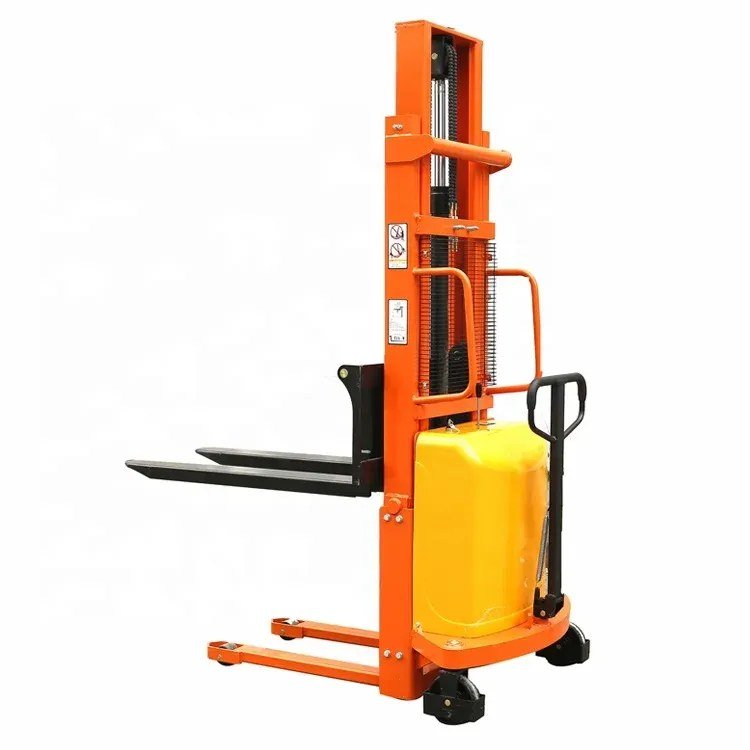
What a semi electric stacker does, and where it stops
A semi electric stacker is a walk behind machine with a mast. The battery powers the lift, and the operator pushes and steers with the tiller. It is also sold as a stacker truck or a semi electric pallet stacker, and it sits between a pump truck and a counterbalance forklift in both price and ability.
The difference that matters on the floor is height. A hand pallet truck lifts a pallet just clear of the floor so it can be moved. A stacker lifts that same pallet onto a racking beam, into a container, onto a mezzanine landing, or on top of another pallet. Travel is still muscle, so the machine earns its place on short runs in narrow aisles, not on long hauls across a yard.
Guide prices in the manual and semi electric stacker range open at £435 ex VAT for a manual hand stacker, where you pump the forks up by hand. A powered lift starts at £640 ex VAT for a 1 t machine with a 3.5 m mast. If the operator also needs powered travel, that is a full electric machine from the electric stacker range instead.
How high does the top pallet actually have to go?
Work from the load, not from the machine. Measure from the floor to the surface the pallet will sit on, then add clearance so the forks can lift over the beam and set the load down cleanly. That figure is the lift height to buy, and it is the single biggest driver of price in this range.
There are three practical steps. Compact self lifting machines reach 1100 mm to 1600 mm, which covers a van bed, a bench, a cage or one pallet stacked on another. Walkie models reach 1.6 m to 3.5 m, which covers the second and third beam in most cash and carry and small warehouse racking. At the top of the range a 4.5 m walkie stacker with adjustable forks reaches a third or fourth beam at £1,170 ex VAT.
Two figures catch buyers out. The first is residual capacity: the rating on the plate is measured at the lowest fork position and tapers as the mast extends, so a 2 t machine is not lifting 2 t at 4.5 m. The second is the lowered height of the mast, which is what decides whether the machine goes through a shutter or a container door and clears pipework and sprinkler heads. Both are confirmed on your written quote before you order.
Semi electric stacker capacities, lift heights and prices compared
All four machines below power the lift and leave the push to the operator. Prices are guide prices in GBP ex VAT and a written quote confirms the figure for your order.
| Machine | Capacity | Lift height | Forks and legs | From |
|---|---|---|---|---|
| Walkie stacker, single mast | 1 t | 3.5 m | Forks 900 to 1100 mm | £640 ex VAT |
| Walkie pallet stacker | 1 to 2 t | 1.6 to 3.5 m | Standard straddle legs | £710 ex VAT, bulk price |
| Walkie stacker, tall mast | 1 to 2 t | 4.5 m | Adjustable forks 1150 to 1220 mm | £1,170 ex VAT |
| Self lifting mini stacker | 500 kg | 1100 to 1600 mm | Compact chassis, lifts itself | £1,005 ex VAT |
The last row looks wrong until you know what it does. It carries the least weight and lifts the lowest, yet costs more than the 3.5 m machine above it, because it is built to lift itself onto a tail lift or a van floor and travel with the delivery. You pay for the trick, not for the tonnage. If the pallet never leaves your own building, the money is better spent on mast height.
Where a second machine earns its keep in a stock build
November is when the forklift stops being free. Goods in runs long, the yard is busy, and the one machine that can reach the top beam is already committed. Every put away then queues behind it, and the aisle work waits.
This is the gap a walkie stacker fills. It is small enough to work an aisle while the forklift stays at the dock, quiet enough to run indoors, and cheap enough that a second unit is a sensible call rather than a project. One person can take a pallet off the floor, put it up on the second or third beam, and bring an empty back down without blocking the loading area.
It also makes a reasonable stand in when the main truck is off the road for a service or a repair. The work still gets done, more slowly, and the pallets that have to go high still go high. For the same reason many sites keep one manual hand stacker as well, because a machine with no battery is one less thing to charge and one less thing to go flat.
What to check before you buy a semi electric stacker
- Top beam height and residual capacity. Measure the beam, then ask for the rated capacity at that height, not just the headline figure.
- Lowered mast height. Check it against every door, shutter and low pipe on the route, including the container if it loads one.
- Legs and pallet type. Straddle legs sit outside the pallet and suit open bottom and closed bottom pallets; narrow or standard legs need the pallet to take the forks between them. Measure your worst pallet, not your best one.
- Fork length and width. Forks of 900 to 1220 mm cover standard UK and euro pallets, but check anything oversized or plastic before you commit.
- Floor and gradient. Small wheels dislike broken concrete, expansion gaps and ramps. If the route crosses a yard, say so when you ask for the quote.
- Battery and charging point. Lithium or lead acid changes where it charges and how long it stands idle. Check there is a socket near where the machine parks.
- Training and inspection. No licence is required in law, but PUWER 1998 requires operators to be adequately trained, and lifting equipment is subject to thorough examination under LOLER 1998. Decide who signs that off before the machine arrives.
Prices, quantities and what your written quote confirms
Everything in this range is made to order at our partner factories, inspected before dispatch with photos and video sent to you, then delivered anywhere in the UK. Guide prices are in GBP ex VAT and are explained on the price guide.
The written quote by email is what to work from. It confirms the price for the quantity you want, the freight, duty and VAT, the lift height and capacity you have specified, and the lead time, and it holds for 30 days. One machine or several, the quote is priced the same way, and any quantity is welcome.
If you know the beam height and the heaviest pallet, that is enough to price the job. Send those two figures and the pallet type, and the right machines from the stacker range come back with prices against them.
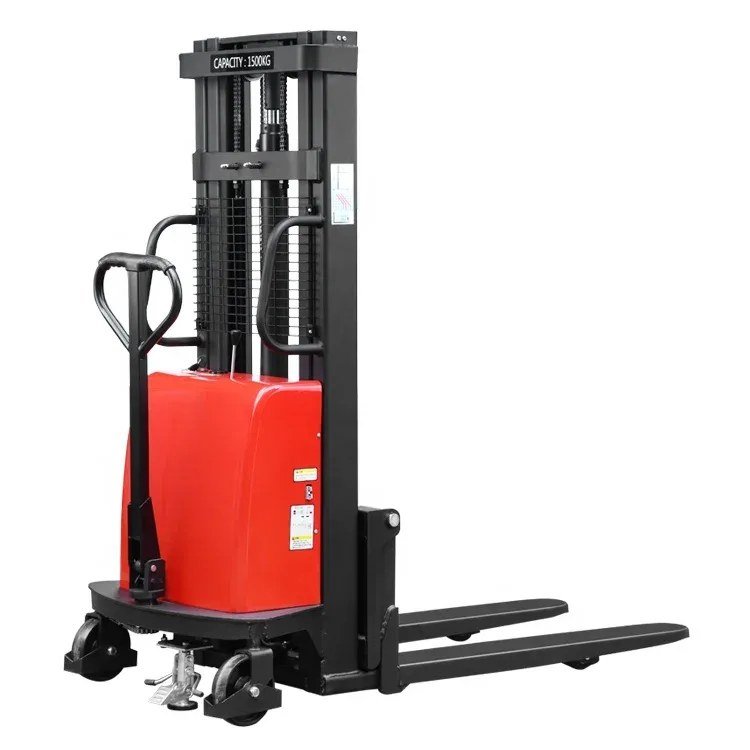
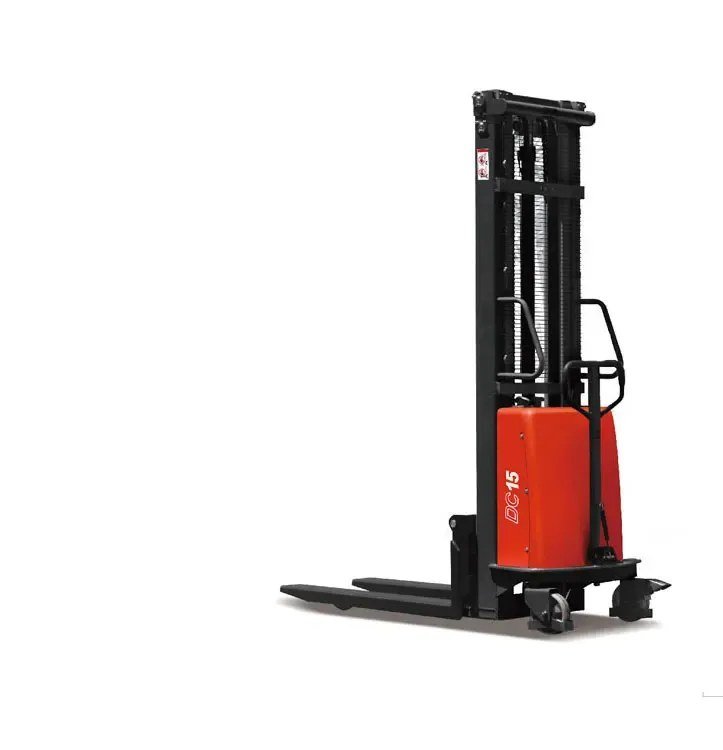
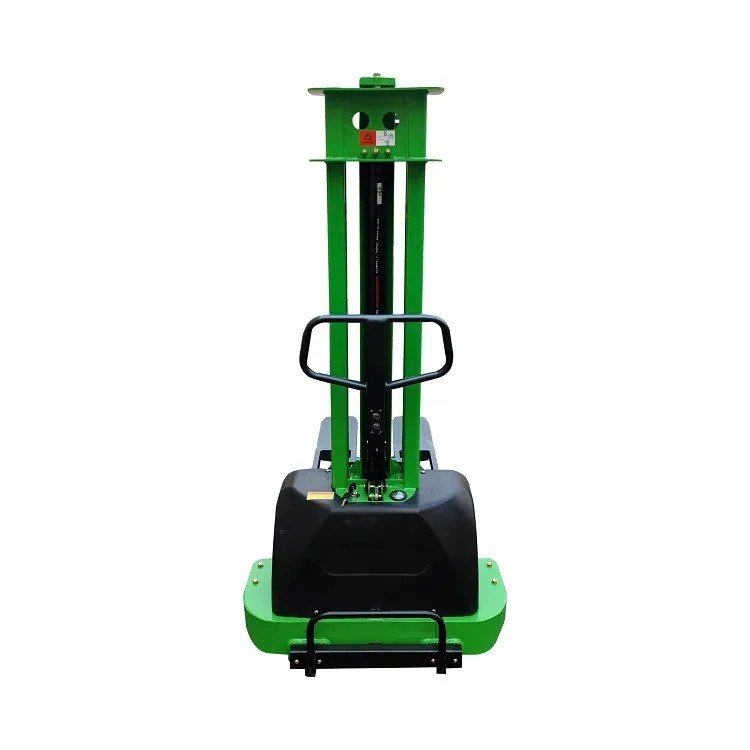
Semi electric stackers in this guide
Questions people ask
What is a semi electric stacker?
It is a walk behind stacker with a powered mast and no powered travel. The battery raises and lowers the forks, and the operator pushes and steers the machine by the tiller.
How much does a semi electric stacker cost?
Powered lift starts at £640 ex VAT for a 1 t machine with a 3.5 m mast. A manual hand stacker in the same range starts at £435 ex VAT, and a 4.5 m walkie stacker is £1,170 ex VAT.
How high does a semi electric stacker lift?
From 1100 mm on a compact self lifting machine up to 4.5 m on a tall mast walkie model. Most warehouse and cash and carry work is covered by the 1.6 m to 3.5 m models.
Do you need a licence to use one?
No licence is required by law, but PUWER 1998 requires operators to be adequately trained for the equipment they use, and HSE guidance L117 covers lift truck operator training. Most sites run a short in house course and keep a record.
Will it lift a closed bottom pallet?
Only a machine with straddle legs will, because the legs pass outside the pallet and the forks sit above it. A standard or narrow leg machine needs a pallet that will take the forks between the legs.
What sort of floor does it need?
A sound, level, swept floor. Small load wheels struggle with broken concrete, wide expansion gaps and steep ramps, so describe the route when you ask for a quote and the specification can be matched to it.
Sources: HSE: PUWER 1998 guidance, HSE: LOLER 1998 guidance, HSE L117: Rider operated lift trucks, operator training